Founded in 2012, uCool emerged at a moment when mobile gaming was no longer an experiment but an inevitability. Smartphones were shifting from useful accessories to primary entertainment hubs. The rules of the industry were being rewritten in real time.
Many studios chased noise. Quick downloads. Short-term spikes. Viral bursts that flared and faded.
uCool chose a different path.
Rather than pursue fleeting traffic, it focused on depth. On social structure. On long-term retention. The aim was not merely to launch games, but to build systems players could inhabit.
Behind that direction stands CEO David Guo (aka Yaoqi Guo).
Guo brings more than 25 years of experience in software and game development. His background stretches across network security, user experience design, game theory, and API architecture. He is not simply a game designer in the conventional sense. He is a systems thinker. An engineer of frameworks.
That foundation matters.
Because when a company is shaped by someone trained in infrastructure and logic, its products tend to reflect it. At uCool, structure comes first. Rules must balance. Systems must scale. Design must endure pressure.
As Guo puts it:
“For gamers, a game is not just a hobby or entertainment but a way of life. Mobile gaming is now pivotal, in fact, to everything we do at our company.”
This is not branding language. It is positioning. A declaration that mobile is not a side project but the centre of gravity.
Heroes Charge: Simple to Start, Deep to Master
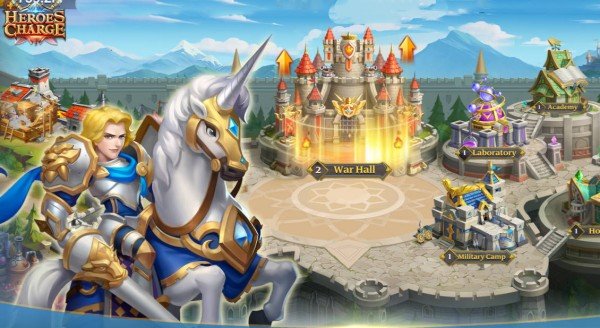
The title that cemented uCool’s market presence is Heroes Charge, with more than 10 million downloads worldwide.
On the surface, it is an action RPG blended with multiplayer online battle arena elements. Accessible. Fast. Immediate.
Underneath, it is a long-term strategic system.
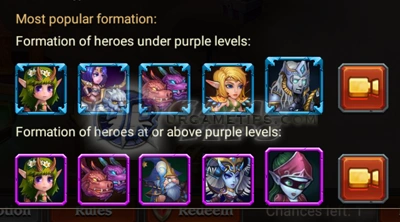
Players explore the world of Kron. They collect and train over 50 heroes — melee bruisers, agile archers, and powerful mages. The differences between them are not cosmetic. They alter outcomes. They reshape tactics. Victory depends on coordination and judgement, not brute statistics alone.
Team composition becomes a live equation. There is no single correct answer. Only shifting variables.
For those familiar with Guo’s grounding in game theory, this architecture makes sense. Tension between heroes creates strategic friction. Friction creates thought. Thought creates engagement.
Systems Determine Lifespan
Heroes Charge offers more than 100 quests. Layered skill upgrades. Equipment progression. Multiple combat modes. PvE and PvP feed into one another. Special events introduce instability and change.
The depth does not come from volume. It comes from interconnection.
Guo’s long experience in API design and network systems echoes here. Clear modules. Defined responsibilities. Expandable frameworks. The game behaves less like a disposable product and more like an evolving structure.
In a market obsessed with short development cycles and rapid turnover, this systems-first mindset becomes a competitive advantage. A barrier not easily copied.
Because spectacle can be imitated. Architecture cannot.
Social Design: From Solo Progress to Collective Strategy
The guild system in Heroes Charge is not decorative. It is structural.
Players build or join guilds. They coordinate. They compete against rival groups for resources and prestige. Cooperation and competition coexist. Individual ambition merges with collective identity.
Retention no longer depends on isolated rewards. It rests on relationships.
Viewed through the lens of game theory, this is a multi-agent system. Decisions ripple outward. Strategy becomes shared. The battlefield expands beyond the individual screen.
Two Companies, One Expanding Universe
Beyond uCool, David Guo is also the CEO and co-founder of Top Games Inc.
The two companies develop different genres. They target distinct audiences. Their positioning is deliberately separated. Yet both are staffed by experienced teams, many with more than a decade in the industry. Responsibilities are clearly divided. Missions are defined.
This is not duplication. It is a structural extension.
uCool focuses on RPG and socially driven strategy experiences. Top Games explores other genres and directions. Separate engines. Shared philosophy.
The result is a broader creative universe. Horizontal expansion across product lines. Vertical deepening of expertise. Innovation is not confined to one format. It travels.
Free-to-Play, Carefully Balanced
Heroes Charge is free to download. Optional in-app purchases exist. But the core experience remains intact without compulsory spending.
The model reflects an understanding of lifecycle design. First, widen the door. Then, deepen engagement. Let investment grow from interest, not pressure.